
Insurance After Breathalyzer Refusal — South Carolina
Free to compare
Two Suspensions, Two Rate Hits
You refused the breathalyzer during a South Carolina traffic stop. The officer told you about implied consent consequences, but what most drivers don't grasp until the SCDMV suspension letter arrives is that the refusal triggers its own administrative suspension — separate from any DUI criminal case. This administrative track moves faster than the court system and hits your insurance rates immediately, whether or not you're ever convicted of DUI.
South Carolina's implied consent law (SC Code § 56-5-2951) gives SCDMV authority to suspend your license for 6 months on a first refusal, independent of what happens in criminal court. That administrative suspension requires SR-22 proof of insurance to reinstate. Your insurance carrier sees both the refusal suspension and any pending DUI charge as separate risk markers — you pay for both, even if the criminal charge is later reduced or dismissed.
“A breathalyzer refusal isn't a substitute for a DUI charge in the eyes of insurers — it's an independent underwriting event that carriers price separately.”
Find South Carolina Coverage After a DUI
Get My South Carolina DUI Insurance Quote$220–$380/mo
SC Post-Refusal Premium Range
Typical monthly cost for minimum liability plus SR-22 after breathalyzer refusal in South Carolina, before any DUI conviction. Rates reflect the administrative suspension alone. A subsequent conviction adds another 40–70% on top of this baseline.
Estimates based on South Carolina non-standard carrier rate structures, 2025
What the Refusal Actually Costs You
The breathalyzer refusal suspension is administrative, not criminal. SCDMV processes it through their electronic notification system within days of the arrest. You have 30 days from the notice date to request an administrative hearing to contest the suspension — if you miss that window, the 6-month suspension begins automatically.
During those 6 months, South Carolina requires continuous SR-22 insurance coverage to maintain eligibility for a Route Restricted License (the state's hardship permit). Even if you don't drive, letting SR-22 lapse resets your suspension clock. The SR-22 filing itself costs $25–$50 as a one-time fee, but the rate increase from being classified as high-risk is where the real cost lives.
After the 6 months, reinstatement requires proof that SR-22 has been maintained without lapse, payment of a $100 reinstatement fee to SCDMV, and completion of ADSAP (Alcohol and Drug Safety Action Program) if the refusal occurred alongside a DUI arrest. The SR-22 filing requirement continues for 3 years from the reinstatement date, not from the original suspension date.
The administrative refusal suspension and any criminal DUI conviction run on parallel tracks. You can resolve one and still face consequences from the other — insurers price both risks separately.


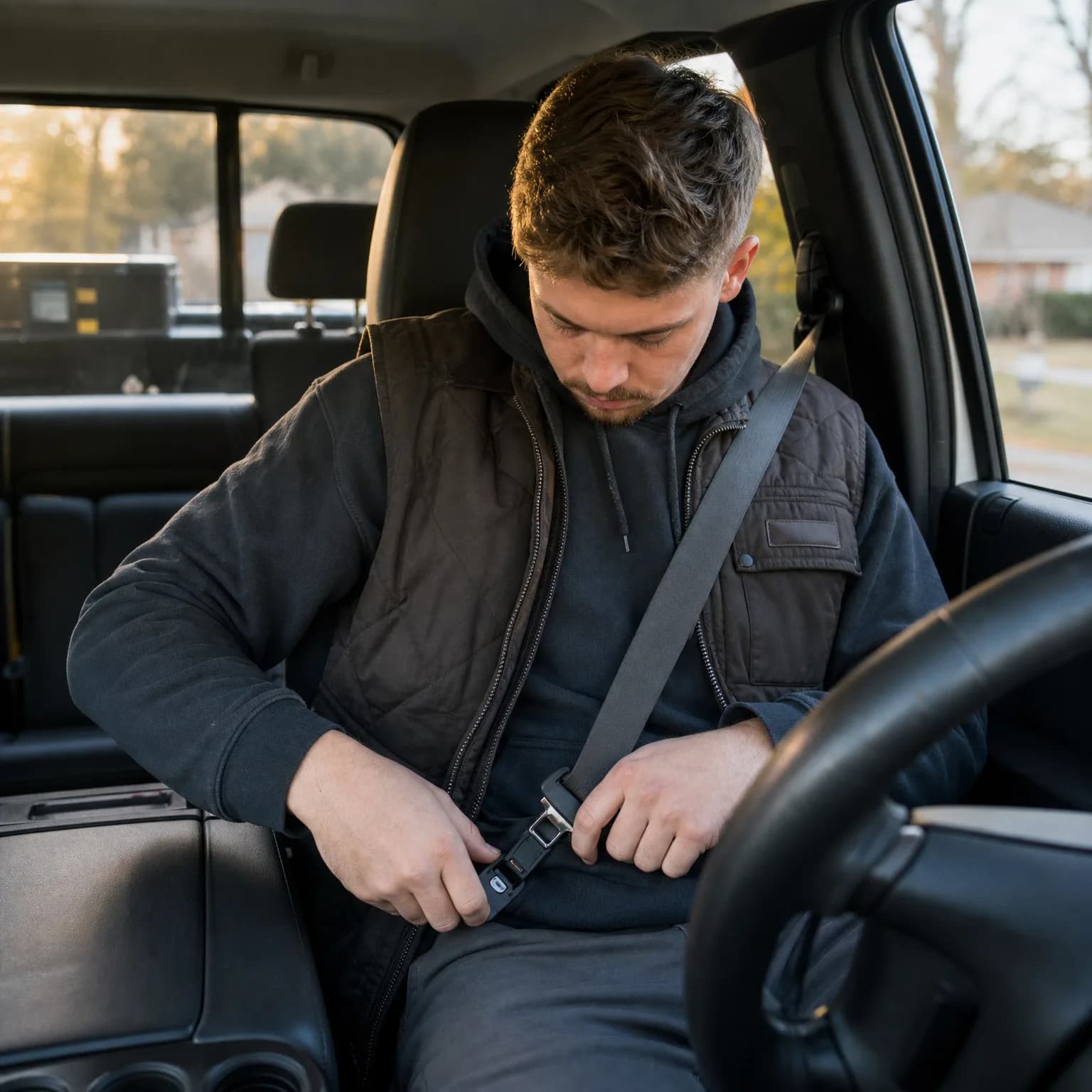


Route Restricted License During Suspension
South Carolina allows Route Restricted License eligibility after the first 30 days of an implied consent suspension. You apply through SCDMV with proof of SR-22 insurance, a $100 application fee, documentation of employment or other qualifying need (medical appointments, childcare, education), and confirmation of ignition interlock device installation if your refusal occurred in a DUI context under Emma's Law provisions.
The Route Restricted License limits you to court-defined or SCDMV-defined routes: work, school, medical appointments, ADSAP classes, and other essential travel specified on the license itself. Time restrictions often apply — many Route Restricted Licenses specify hours tied to your work schedule. Driving outside the approved route or time window, even once, triggers revocation of the restricted license and extends your total suspension period.
SR-22 insurance must remain active for the entire restricted license period. A lapse noticed by SCDMV's electronic verification system results in immediate revocation of the Route Restricted License, and the full 6-month suspension clock resets from the date of lapse. Carriers notify SCDMV electronically within 24 hours of a policy cancellation or non-renewal — there is no grace period.
3 years
SC SR-22 Filing Duration
South Carolina requires SR-22 proof of insurance for 3 years following reinstatement after an implied consent refusal suspension. The clock starts on your reinstatement date, not your suspension start date. Any lapse during those 3 years resets the requirement period.
SC Code § 56-10-225, SCDMV reinstatement requirements
If a DUI Conviction Follows
When a breathalyzer refusal case results in a DUI conviction months later, you face a second suspension imposed by the court, running either concurrently with or consecutive to the administrative suspension depending on court order and timing. The conviction triggers its own SR-22 filing requirement (another 3-year period from conviction date) and adds another reinstatement fee when that suspension ends. ADSAP completion, already required for the administrative suspension, covers both tracks — you don't repeat the program, but you do pay separate reinstatement fees.
Insurance rates adjust again when the conviction posts to your MVR. Carriers re-underwrite your policy at renewal, applying the DUI conviction surcharge on top of the refusal surcharge already in place. Expect rates to climb another 40–70% from the post-refusal baseline. In practical terms, a driver paying $280/month after the refusal suspension may see rates rise to $400–$475/month once a DUI conviction is finalized, and those elevated rates persist for 5–7 years from the conviction date in South Carolina.
Finding Coverage After Refusal
Non-standard carriers writing South Carolina high-risk business include Direct Auto, The General, Bristol West, Dairyland, GAINSCO, Acceptance, and National General. Progressive writes some SR-22 policies in South Carolina through its standard division for drivers with single violations and stable payment history. State Farm and Geico file SR-22 for existing customers in some cases, but most drivers moving from standard to non-standard tier after a refusal suspension will need to shop outside their current carrier.
Get quotes from at least three non-standard carriers before committing. Rate variation for the same driver profile and violation history can exceed $100/month between carriers in South Carolina's non-standard market. Some carriers offer payment plans that avoid the 20–30% full-pay discount standard carriers provide, but monthly installment fees add up — factor those into total cost comparisons. If you currently own a vehicle, you need a standard auto policy with SR-22 endorsement. If you sold your vehicle or don't own one during suspension, a non-owner SR-22 policy satisfies SCDMV's filing requirement at roughly half the cost of a standard policy, typically $85–$140/month.
Start the SR-22 filing process as soon as SCDMV's suspension notice arrives. Carriers can file SR-22 electronically with SCDMV within 24–48 hours of binding coverage, but you cannot apply for a Route Restricted License until SR-22 proof posts to SCDMV's system and the mandatory 30-day hard suspension period ends. Waiting until day 29 to shop for coverage delays your Route Restricted License eligibility and extends the period you cannot drive at all.
How Carriers Price Refusal Risk
Non-standard carriers writing South Carolina SR-22 business — Direct Auto, The General, Bristol West, Dairyland, GAINSCO, Progressive's non-standard division — assess refusal suspensions using a base rate for high-risk drivers, then apply a violation surcharge. The surcharge for implied consent refusal typically ranges from 60–90% above the high-risk base rate, comparable to a first-offense DUI surcharge. If your refusal case later results in a DUI conviction, carriers apply an additional surcharge stacked on top of the refusal penalty.
This stacking is the structural reality most drivers miss. A breathalyzer refusal isn't a substitute for a DUI charge in the eyes of insurers — it's an independent underwriting event. If you're convicted of DUI after refusing the test, you carry two separate violations on your record for rating purposes: the administrative refusal and the criminal conviction. Your premium reflects both. A driver who took the test and blew over the limit faces one violation; a driver who refused and was later convicted faces two.
Get Your Free Quote
Get My South Carolina DUI Insurance QuoteFrequently Asked Questions
Do I need SR-22 insurance if I only refused the breathalyzer and wasn't charged with DUI?
Yes. South Carolina's implied consent suspension for breathalyzer refusal requires SR-22 proof of insurance for reinstatement, regardless of whether criminal DUI charges were filed. The administrative suspension through SCDMV operates independently of any criminal case, and SR-22 is mandatory for the 6-month refusal suspension period and 3 years following reinstatement.
How much does insurance cost after a breathalyzer refusal in South Carolina?
Expect $220–$380/month for minimum liability with SR-22 after a breathalyzer refusal suspension in South Carolina, before any DUI conviction. If the refusal case results in a DUI conviction later, rates typically increase another 40–70% on top of the refusal baseline, pushing monthly premiums to $400–$475/month or higher depending on your age, county, and driving history.
Can I get a hardship license during a breathalyzer refusal suspension in South Carolina?
Yes, after the first 30 days. South Carolina's Route Restricted License is available following the mandatory 30-day hard suspension period for implied consent refusal. You must provide SR-22 proof of insurance, pay a $100 application fee to SCDMV, show proof of employment or qualifying need, and install an ignition interlock device if the refusal occurred in a DUI context under Emma's Law.
Does a breathalyzer refusal raise insurance rates as much as a DUI conviction?
Nearly. Non-standard carriers in South Carolina price implied consent refusal suspensions with violation surcharges of 60–90% above base high-risk rates, comparable to first-offense DUI surcharges. If you're later convicted of DUI following the refusal, carriers apply a second surcharge on top of the refusal penalty, meaning you carry both violations for rate calculation purposes.
How long does SR-22 filing last after a breathalyzer refusal in South Carolina?
3 years from your reinstatement date. South Carolina requires SR-22 continuous coverage for 3 years following reinstatement after an implied consent refusal suspension. The clock starts when your license is reinstated, not when the suspension began. Any lapse in SR-22 coverage during those 3 years resets the entire requirement period.
What happens to my insurance if I refused the breathalyzer and the DUI charge was dismissed?
The administrative suspension and its insurance consequences remain. South Carolina's implied consent suspension operates independently of the criminal case outcome. Even if DUI charges are dismissed, reduced, or never filed, the 6-month refusal suspension posts to your MVR, carriers classify you as high-risk, and SR-22 is required for reinstatement. Your rates reflect the refusal violation regardless of court outcomes.
Can I avoid SR-22 if I don't drive during my breathalyzer refusal suspension?
No. South Carolina requires SR-22 proof of insurance as a condition of reinstatement after an implied consent suspension, whether or not you drive during the suspension period. If you don't own a vehicle, a non-owner SR-22 policy satisfies SCDMV's requirement at lower cost than a standard policy, but you cannot skip SR-22 filing and still regain your license.