
Insurance After Two DUIs — South Carolina
Free to compare
Finding Coverage After a Second South Carolina DUI Conviction
You received your second DUI conviction in South Carolina and now face a reality standard carriers won't touch: Progressive denied your quote, State Farm referred you to their non-standard division, and GEICO quoted $420/month for minimum liability. You need SR-22 filing to start your reinstatement clock, but the carriers who will actually write two-conviction policies charge rates that make keeping a job nearly impossible.
The structural reality: South Carolina law requires three simultaneous processes after a second DUI—Emma's Law ignition interlock installation, ADSAP (Alcohol and Drug Safety Action Program) completion, and continuous SR-22 insurance filing for three years. Miss any one deadline and your reinstatement timeline resets. The carriers who write second-offense policies understand this stacked requirement structure and price accordingly, but five non-standard carriers operating in SC will quote rates 40-60% lower than what standard carriers charge high-risk divisions.
“SCDMV will not process reinstatement until ignition interlock, ADSAP, and SR-22 filing all clear simultaneously—starting one before the others wastes months.”

Find South Carolina Coverage After a DUI
Get My South Carolina DUI Insurance Quote$185–$240/month
SC Two-DUI Liability Premium Range
Non-standard carriers writing second-offense policies in South Carolina quote minimum liability coverage (25/50/25) between $185 and $240 monthly for drivers with clean records outside the two DUI convictions. Rates climb to $280–$350/month when points, lapses, or accidents layer on top of the convictions.
Carrier rate filings and SC Department of Insurance non-standard market data, 2024
Why Standard Carriers Won't Quote Second Offenses
Standard and preferred carriers—State Farm's main book, GEICO's primary underwriting tier, Progressive's standard division—operate under underwriting guidelines that automatically decline second DUI convictions within five years. South Carolina does not prohibit this practice; carriers classify two DUIs within a five-year window as uninsurable risk under standard pricing models. When you request a quote online, the system flags the second conviction during the motor vehicle report pull and either declines outright or routes you to a non-standard affiliate at triple the standard rate.
The second-conviction threshold is a hard underwriting rule, not a pricing adjustment. A single DUI moves you to a high-risk tier within the standard market; a second conviction within five years moves you out of the standard market entirely. Farmers, Nationwide, Allstate, and Hartford all operate under similar two-conviction exclusions in South Carolina. You cannot negotiate this boundary—it exists in filed underwriting guidelines approved by the SC Department of Insurance.
Non-standard carriers exist specifically to write policies standard carriers decline. These are not subprime lenders or fly-by-night operations; they are licensed insurers with AM Best ratings writing policies that meet South Carolina's statutory minimum requirements and SR-22 filing obligations. The rate difference reflects actuarial risk, not coverage quality. Your policy will satisfy SCDMV reinstatement conditions identically to a State Farm policy—it simply costs more because your loss history statistically predicts higher claim frequency.

SCDMV will not process your reinstatement application until all three requirements clear simultaneously: ignition interlock installed and logged for the full required period, ADSAP certificate in hand, and SR-22 filing active and current. Starting one before the others wastes time.

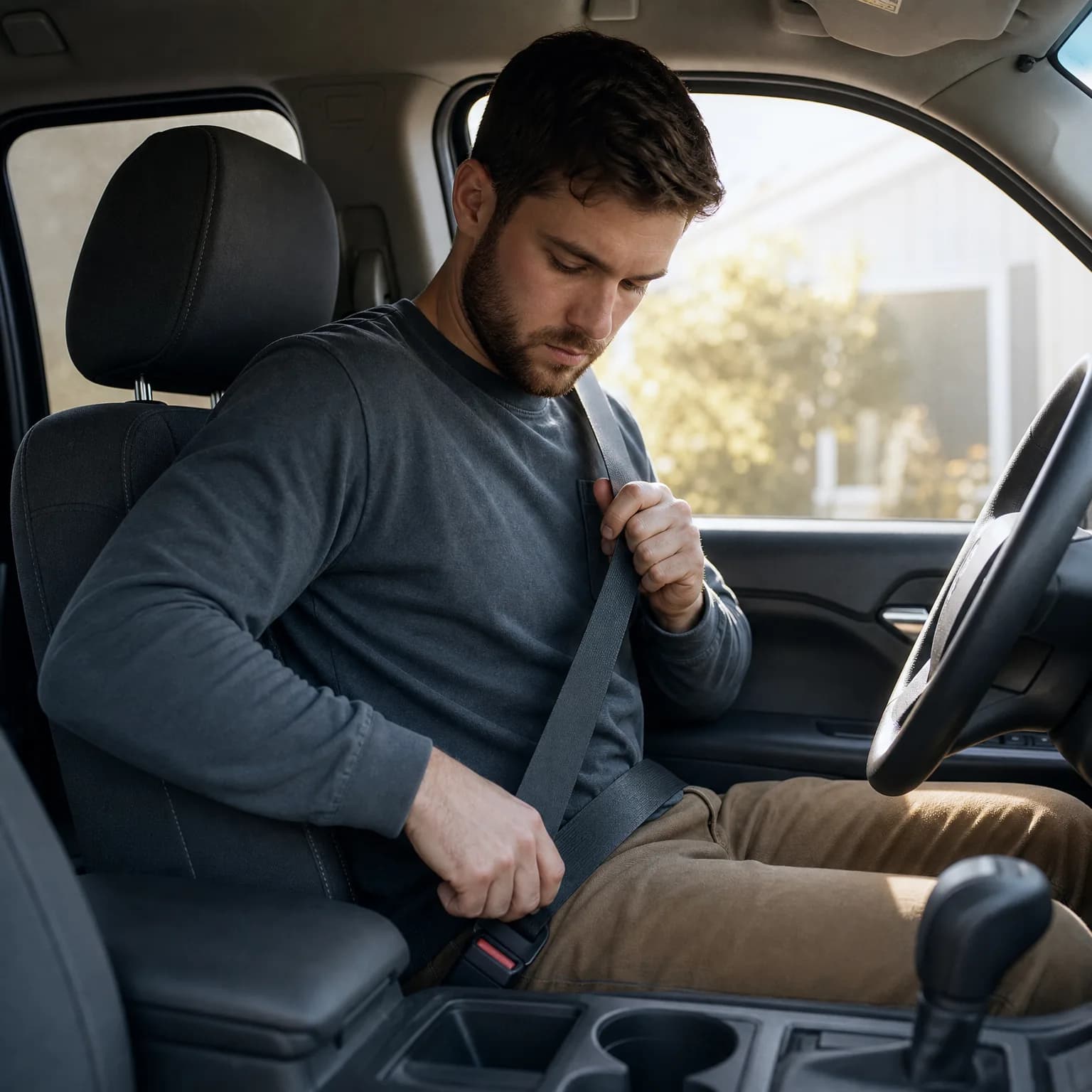





Emma's Law Ignition Interlock Requirement and Insurance Timing
South Carolina's Emma's Law mandates ignition interlock device installation for all second-offense DUI convictions as a condition of any driving privilege, including Route Restricted License eligibility. The ignition interlock period for a second offense runs two years from the date SCDMV approves your Route Restricted License application, not from your conviction date or suspension start date. You cannot drive legally—even under a Route Restricted License—until the ignition interlock device is installed, calibrated, and logged in SCDMV's monitoring system.
SR-22 insurance must be active before SCDMV will approve your Route Restricted License application. This creates a sequencing problem: you need insurance to get the restricted license, but you cannot drive to work (the justification for most Route Restricted License applications) until the interlock is installed. The correct sequence: obtain SR-22 insurance first, apply for the Route Restricted License with proof of SR-22 filing and ignition interlock installation confirmation, wait for SCDMV approval, then begin driving under the Route Restricted License terms. Most carriers will bind SR-22 policies even when you do not yet hold a valid license, as long as you disclose the Route Restricted License application is pending.
ADSAP completion is the third requirement. South Carolina requires all second-offense DUI drivers to complete the Alcohol and Drug Safety Action Program before full license reinstatement. ADSAP typically runs 12–18 months and includes classes, evaluations, and random drug testing. You can complete ADSAP while holding a Route Restricted License, but SCDMV will not process final reinstatement until you provide the ADSAP completion certificate, proof of continuous SR-22 filing for the full three-year period, and documentation that the ignition interlock requirement has been satisfied for the full two-year period. All three timelines must overlap—starting SR-22 filing two years after your conviction means your reinstatement gets pushed out two additional years beyond your interlock and ADSAP completion.
3 years
South Carolina SR-22 Filing Period
SCDMV requires continuous SR-22 insurance filing for three years following a second DUI conviction, measured from the date your SR-22 filing begins, not from your conviction date. Any lapse in coverage during the three-year period resets the clock to day one—you must maintain continuous coverage for a full unbroken three-year period before SCDMV will approve final reinstatement.
SC Code § 56-1-1320 and SCDMV reinstatement requirements

Route Restricted License Eligibility and Coverage Requirements
South Carolina offers Route Restricted License eligibility after the mandatory hard suspension period for a second DUI offense. The hard suspension period for a second offense is typically 90 days to one year depending on BAC level and whether the conviction occurred within five years of the first offense. You cannot apply for a Route Restricted License until the hard suspension period expires. Once eligible, you must apply to SCDMV with proof of SR-22 insurance, proof of ignition interlock installation, and documentation of employment or other qualifying need such as medical appointments or educational enrollment.
The Route Restricted License limits your driving to court-defined or SCDMV-defined routes. Most Route Restricted Licenses in South Carolina authorize travel only between home, work, ADSAP classes, ignition interlock service appointments, and medical providers. You cannot use a Route Restricted License for general errands, social visits, or any purpose not explicitly listed on the license document. Violating route restrictions triggers automatic revocation of the Route Restricted License and extends your full reinstatement timeline by the length of the original suspension—often adding another year or more to your total time without full driving privileges.
Compare Non-Standard Carriers and Lock Coverage
Request quotes from The General, Direct Auto, Bristol West, Dairyland, and Acceptance Insurance before choosing a carrier. Premium differences of $40–$90/month compound to $1,440–$3,240 over the three-year SR-22 filing period. All five carriers provide identical SR-22 filing to SCDMV and meet South Carolina's statutory minimum coverage requirements; the only difference is price. Obtain quotes within the same week—non-standard carrier rates change frequently based on loss ratios and underwriting adjustments, and a quote valid today may not be available 30 days from now. Bind coverage as soon as your ignition interlock installation appointment is confirmed so your SR-22 filing starts the three-year clock without delay. Missing even one day between interlock installation and SR-22 filing activation creates a coverage gap that pushes your final reinstatement date back by however long the gap lasted.
Non-Standard Carriers Writing Second-Offense Policies in South Carolina
The General writes second-offense DUI policies in South Carolina and maintains the lowest average quoted premium among non-standard carriers at $185–$210/month for minimum liability. The General operates as a direct writer with online quoting and does not require broker intermediation. SR-22 filing is included in the quoted premium with no separate filing fee. The General's underwriting accepts second convictions as long as the driver holds a valid South Carolina license or provisional Route Restricted License with ignition interlock notation. Policies bind immediately upon payment; SR-22 form transmits to SCDMV electronically within one business day.
Direct Auto operates 15 storefront locations across South Carolina and specializes in high-risk driver markets including second-offense DUI. Quoted premiums range $195–$230/month for 25/50/25 liability. Direct Auto requires an in-person visit to finalize the policy but provides same-day SR-22 filing once payment clears. Their underwriting allows Route Restricted License holders to bind coverage before full reinstatement, which matters when you need SR-22 filing active during your ignition interlock period. Bristol West writes second-offense policies through independent agents and quotes $210–$250/month. Acceptance Insurance operates in South Carolina's non-standard market and quotes similar ranges but requires a $50 SR-22 filing fee on top of the premium. Dairyland writes two-conviction policies and offers non-owner SR-22 options for drivers without a vehicle, critical if you sold your car after the second conviction and need SR-22 filing to start your reinstatement clock without owning a vehicle.
Get Your Free Quote
Get My South Carolina DUI Insurance QuoteFrequently Asked Questions
Can I get car insurance in South Carolina with two DUI convictions?
Yes. Five non-standard carriers—The General, Direct Auto, Bristol West, Dairyland, and Acceptance Insurance—write policies for drivers with two DUI convictions in South Carolina. Standard carriers like State Farm and GEICO decline second-offense applications under filed underwriting guidelines. Non-standard carrier premiums for minimum liability coverage range $185–$240/month and include required SR-22 filing to SCDMV.
How much does SR-22 insurance cost after a second DUI in South Carolina?
Non-standard carriers quote $185–$240/month for minimum liability coverage with SR-22 filing after a second DUI conviction in South Carolina. Rates increase to $280–$350/month when additional violations—points, lapses, accidents—layer on top of the two DUI convictions. The General and Direct Auto quote the lowest average premiums; Acceptance Insurance charges a separate $50 SR-22 filing fee on top of the premium.
Do I need SR-22 insurance to get a Route Restricted License in South Carolina after a second DUI?
Yes. SCDMV requires proof of active SR-22 insurance filing before approving a Route Restricted License application following a second DUI conviction. You must obtain SR-22 coverage, bind the policy, and wait for the carrier to electronically file the SR-22 form with SCDMV before submitting your Route Restricted License application. Without proof of SR-22 filing on record, SCDMV will deny the application.
How long do I need to keep SR-22 insurance after a second DUI in South Carolina?
South Carolina requires continuous SR-22 insurance filing for three years following a second DUI conviction, measured from the date your SR-22 filing begins. Any lapse in coverage during the three-year period resets the clock to day one. You must maintain unbroken SR-22 coverage for a full three-year period before SCDMV will approve final license reinstatement and remove the SR-22 requirement.
What happens if my SR-22 insurance lapses during my reinstatement period in South Carolina?
Your insurance carrier must notify SCDMV electronically within 24 hours of any policy cancellation or lapse. SCDMV immediately suspends your driving privileges and resets your three-year SR-22 filing period to day one. You must obtain new SR-22 coverage, pay a $100 reinstatement fee, and restart the full three-year continuous filing requirement from the date the new SR-22 filing becomes active.
Can I get non-owner SR-22 insurance in South Carolina if I don't have a car after my second DUI?
Yes. Dairyland, The General, and GEICO write non-owner SR-22 policies in South Carolina for drivers who do not own a vehicle but need SR-22 filing to satisfy reinstatement requirements. Non-owner premiums range $80–$140/month and provide liability coverage when you drive a borrowed or rented vehicle. The SR-22 filing from a non-owner policy satisfies SCDMV's requirement identically to a standard auto policy.
Does South Carolina require ignition interlock for a second DUI conviction?
Yes. South Carolina's Emma's Law mandates ignition interlock device installation for all second-offense DUI convictions as a condition of any driving privilege, including Route Restricted License eligibility. The ignition interlock requirement typically runs two years from the date SCDMV approves your Route Restricted License. You cannot drive legally—even under restricted conditions—until the ignition interlock device is installed and logged in SCDMV's monitoring system.